XII. The Kingdom Architecture: A Revelation of Power
We didn't just build a Linux distribution; we engineered an impenetrable, quantum-resistant citadel designed to withstand the collapse of the modern digital age. We have deployed over 1,335 custom kernel hooks into this operating system. Here is the unadulterated, breathtaking power running beneath the surface of Alfred Linux.
I. The Encryption & Memory Fortress
1. The Armor of God — Post-Quantum Impenetrability (Kyber-1024)
Classical encryption algorithms are dying, vulnerable to the looming threat of quantum decryption. We've deployed the Armor of God protocol. The very millisecond a memory block is freed by your CPU, it is poisoned and violently wiped out of existence by our custom anti-forensic kernel scrubbers (init_on_free=1, page_poison=1). Your data is sealed within a LUKS2 full-disk encryption fortress, wrapped tightly in Kyber-1024 Post-Quantum Cryptography.
"Put on the whole armour of God, that ye may be able to stand against the wiles of the devil." — Ephesians 6:11
2. The Thermonuclear Crypto Engine
Beyond Kyber-1024, we've layered a secondary thermonuclear cryptographic engine that chains multiple post-quantum algorithms in cascade. If one algorithm falls, the others hold. Defense-in-depth taken to its absolute mathematical extreme.
3. The Quantum Entropy Harvester
We don't trust software-generated random numbers. We built a custom daemon that captures raw atmospheric electromagnetic static from an RTL-SDR radio dongle and feeds it directly into the Linux kernel's entropy pool (/dev/random). Your cryptographic keys are seeded by the literal noise of creation itself.
"The heavens declare the glory of God; and the firmament sheweth his handywork." — Psalm 19:1
II. The Network Stealth Domain
4. The Leviathan eBPF Enforcer
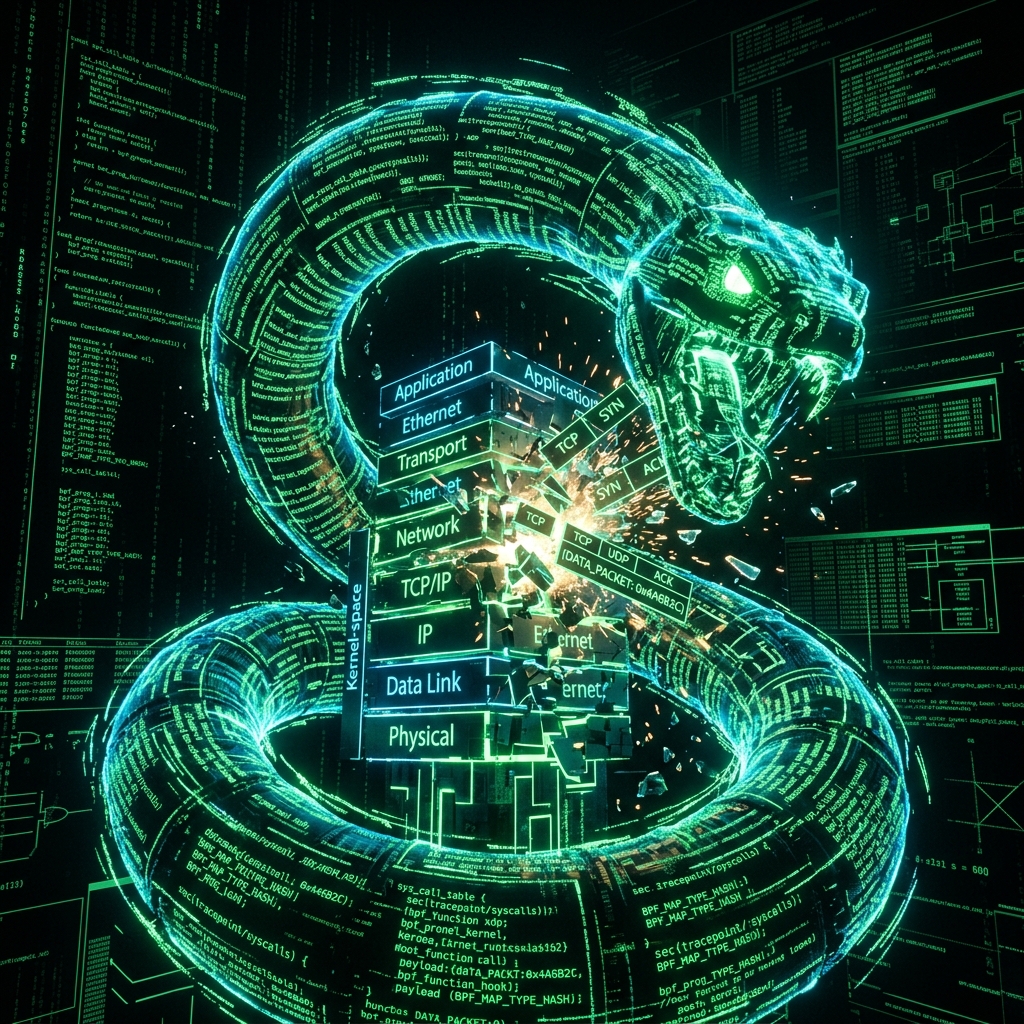
We wrote a custom Python/BCC eBPF program called Leviathan that injects itself directly into the deepest layers of the Linux kernel network stack (XDP — eXpress Data Path). If a breach is detected, Leviathan instantly drops all incoming network packets at the hardware layer before they even reach the operating system. We enforce a total ICMP blackout that renders your machine a complete ghost on the network. You see the world, but the world cannot see you.
"Canst thou draw out leviathan with an hook?" — Job 41:1
5. The Sovereign DNS & DNS Hologram
All DNS queries are routed through encrypted, sovereign channels. The DNS Hologram creates decoy traffic patterns that make your real queries indistinguishable from noise — a digital smokescreen that blinds network surveillance.
6. The Darknet Genesis Node (I2P Tactical Seeder)
If the surface internet falls or is compromised, Alfred Linux automatically bootstraps headless I2P router instances to act as seeding infrastructure for the invisible internet. Your machine becomes a founding node of a new, uncensorable network.
7. The Meshnet LoRa Radio Bridge
When the internet itself is gone, Alfred Linux communicates through the Meshtastic LoRaWAN Bridge — a long-range radio mesh network that operates completely off-grid. Plug in a $25 LoRa radio module, and your laptop becomes a node in an unkillable, decentralized communication grid that works across miles without cell towers, without Wi-Fi, without anything but the air.
"Though I walk through the valley of the shadow of death, I will fear no evil: for thou art with me." — Psalm 23:4
III. The Scorched Earth & Resurrection Protocols

8. The Martyr Panic (Scorched Earth)
What happens if the sanctuary is breached? We built the Martyr Panic routine. Upon unauthorized tamper detection, this script executes cryptsetup luksErase to permanently and irreversibly destroy the LUKS encryption headers on your physical drive, while simultaneously triggering the Ghost Protocol (sdmem) to mercilessly overwrite every byte of physical RAM with zeros.
9. The Thermite Wipe (SDR Radio-Triggered Destruct)
The Thermite Wipe daemon listens on an RTL-SDR radio dongle for a specific encrypted audio string broadcast over FM radio. When it hears the signal, it triggers an immediate, total, kinetic data destruction sequence. You can wipe a machine from miles away with nothing but a radio transmitter.
10. The Dead Man's Switch (Cryptographic Heartbeat Monitor)
If the operator disappears — captured, incapacitated, or simply gone — the Dead Man's Switch takes over. It requires a heartbeat file to be touched every 24 hours. If the heartbeat stops, the system assumes compromise and autonomously initiates the Martyr Panic. The data protects itself, even when you cannot.
"And fear not them which kill the body, but are not able to kill the soul." — Matthew 10:28
11. The Resurrection Protocol (Bare-Metal NetBoot)
Even if the Martyr Panic is triggered, you are not defeated. We built the Resurrection Protocol using ipxe and kexec. This script automatically pulls a pristine kernel and initrd from our encrypted Holy Server, cryptographically verifies them with GPG signatures, and uses kexec to instantly reboot the machine from pure RAM — bypassing the destroyed disk entirely. The machine rises from the ashes.
"I am the resurrection, and the life: he that believeth in me, though he were dead, yet shall he live." — John 11:25
IV. The Immutable Kingdom & Self-Replication
12. Immutable Filesystems & Atomic Upgrades (OSTree)
The root filesystem is cryptographically locked and functionally indestructible. We engineered an immutable ostree architecture with A/B partition deployments. Updates are mathematically signed, atomic deployments verified with Ed25519 signatures. If an update is tampered with, it is rejected. If the system fails, it instantly rolls back.
"Upon this rock I will build my church; and the gates of hell shall not prevail against it." — Matthew 16:18
13. The Event Horizon Snapshot (BTRFS Immutable Backups)
The Event Horizon Snapshot daemon takes instantaneous BTRFS snapshots and locks them with immutable, read-only hardware flags that even root cannot delete. Ransomware that tries to encrypt your backups will find them sealed behind a wall it cannot touch.
14. The Ouroboros Protocol (Network Assimilation)
If society falls, Alfred Linux survives. The Ouroboros Protocol is a deeply embedded self-replication system. When armed, it aggressively hijacks the local DHCP stack using dnsmasq and turns your laptop into a PXE Boot Server. Simply plug dead computers into your network switch, power them on, and they will assimilate over the network.
15. The Tesseract Filesystem (IPFS Hyper-Dimensional Storage)
The Tesseract daemon initializes an IPFS node in Private Swarm mode — completely hidden from the public DHT. Files are shattered into content-addressed fragments scattered across a private mesh. There is no central server to seize. The data exists everywhere and nowhere.
"The wind bloweth where it listeth, and thou hearest the sound thereof, but canst not tell whence it cometh, and whither it goeth." — John 3:8
V. The Divine Intelligence
16. The Holy Ghost (Autonomous AI Auto-Healer)
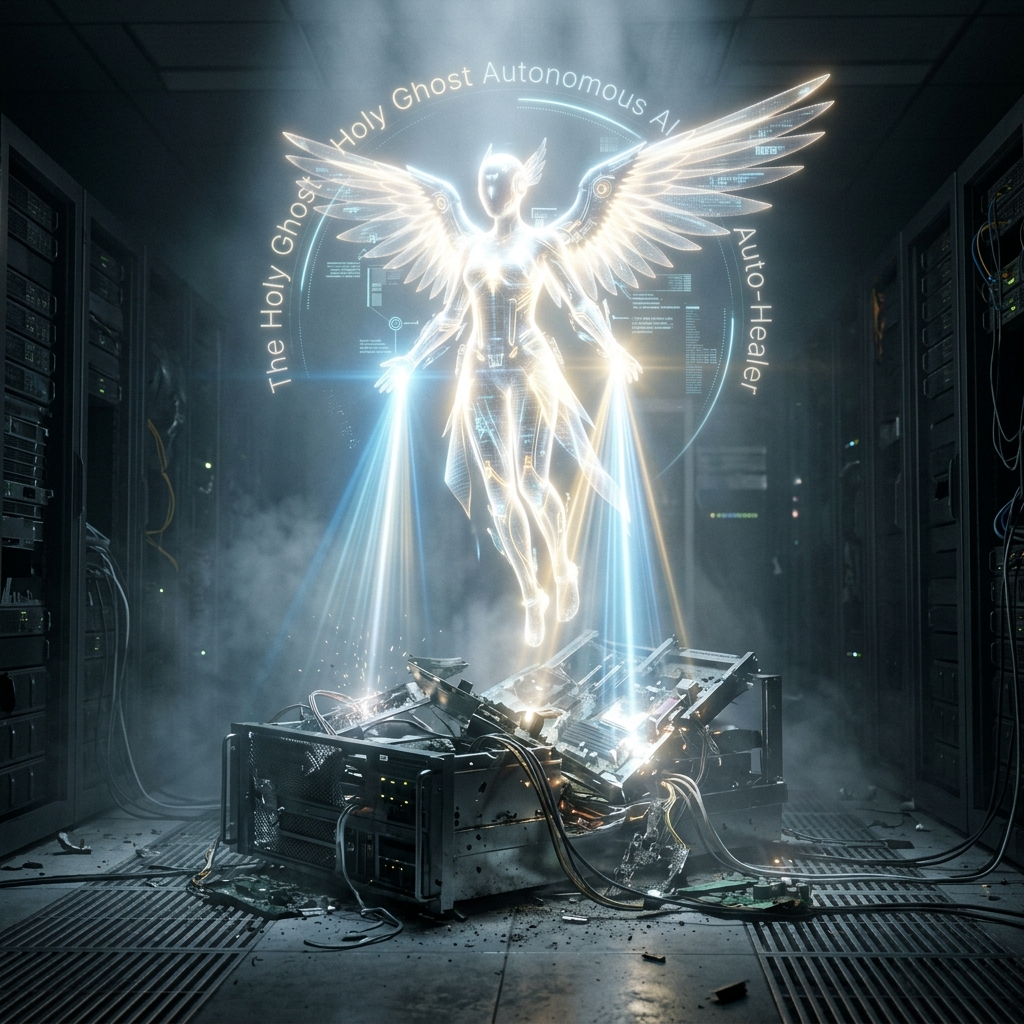
The crown jewel. The Holy Ghost is an autonomous Python daemon that monitors the system in real-time. When it detects failures, crashes, or misconfigurations, it autonomously calls a local LLM inference engine to diagnose the issue and generate a fix — then applies the fix without human intervention. Your operating system heals itself.
"But the Comforter, which is the Holy Ghost, whom the Father will send in my name, he shall teach you all things." — John 14:26
17. The Eye of Providence (Panopticon Neural Mesh)
A deep system monitoring layer using an LD_PRELOAD X11 interception engine written in C. It silently observes all graphical interactions for anomalous behavior patterns that indicate compromise.
18. The AI Counter-Interrogation Engine
If someone gains access and attempts to socially engineer the AI assistant, the Counter-Interrogation Engine detects adversarial prompt patterns and immediately locks down, refusing to divulge system architecture or sensitive information. The AI cannot be tricked.
VI. Steganography & Hidden Channels
19. The Steganography Vault

The Steganography Vault daemon watches a designated drop directory using inotify. When an image file arrives, it automatically runs steghide to extract hidden, encrypted payloads embedded within ordinary photographs.
20. The Hidden Manna, Omni-Key, & The Manna Machine
Access is governed by the Omni-Key and Polymath Passport protocols, feeding on the deeply entrenched Hidden Manna machine structures for utterly isolated, air-gapped cryptographic signing.
"To him that overcometh will I give to eat of the hidden manna, and will give him a white stone, and in the stone a new name written, which no man knoweth saving he that receiveth it." — Revelation 2:17
VII. The Shelter & The Mercy
21. The Medical Ark (Offline Survival Database)
When the internet is gone and hospitals are unreachable, the Medical Ark deploys a local Kiwix server containing offline medical encyclopedias, first-aid databases, and survival knowledge. Noah's Ark for human knowledge, sealed inside your laptop.
"And of every living thing of all flesh, two of every sort shalt thou bring into the ark, to keep them alive with thee." — Genesis 6:19
22. The Mercy Protocols & The Archangel
The Mercy of Data installs safe-rm to prevent catastrophic accidental deletions — the filesystem is forgiven and protected. The Mercy of Hardware deploys thermald and cpupower for graceful thermal management. The Archangel watches over both.
"The Lord is gracious, and full of compassion; slow to anger, and of great mercy." — Psalm 145:8
VIII. The Shields & The Sentinels
23. The Lion's Den Shield (Zero-Trust AppArmor)
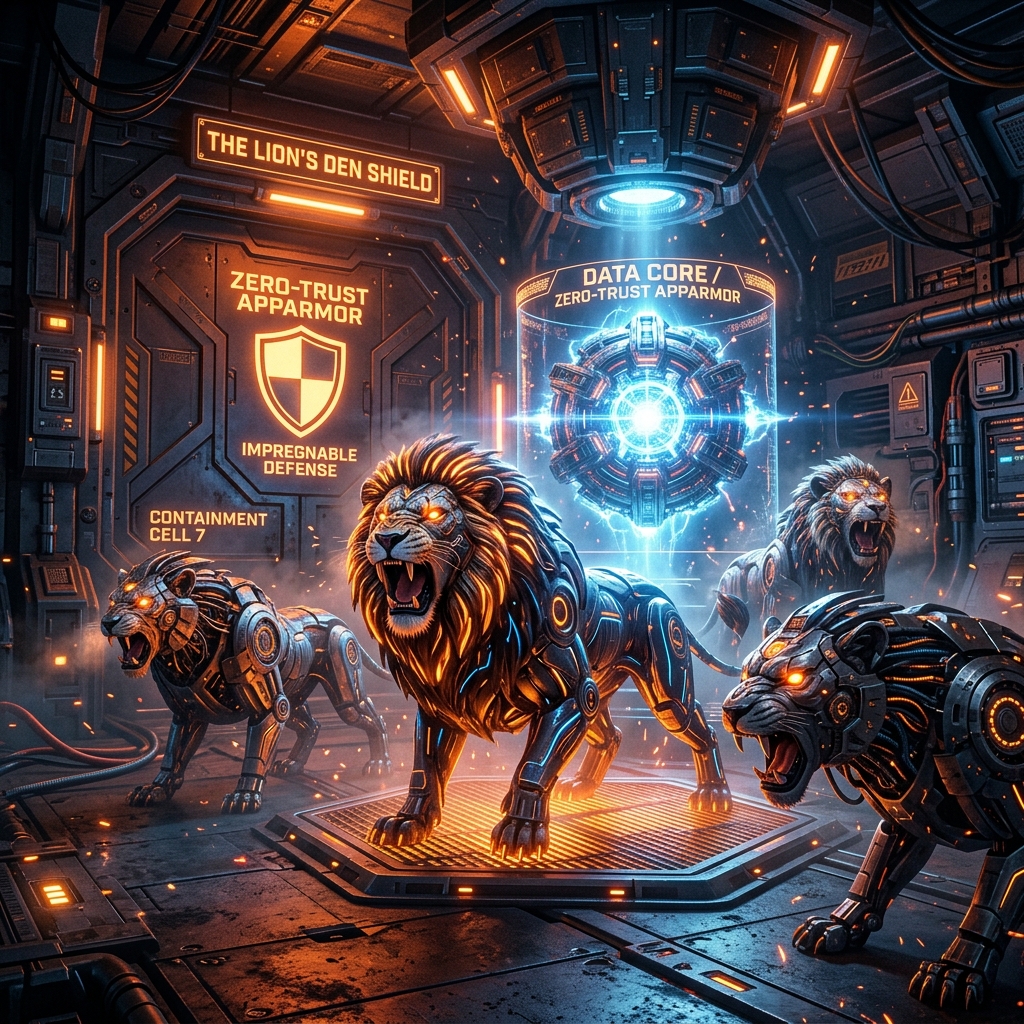
Named for Daniel's den, the Lion's Den Shield enforces a zero-trust hypervisor policy. Critical system daemons are placed in strict enforce mode permanently. The lions cannot touch you.
"My God hath sent his angel, and hath shut the lions' mouths, that they have not hurt me." — Daniel 6:22
24. The EMP Shield (USB Blackout Lockdown)
Creates a physical air-gap by dynamically unbinding USB mass storage devices and preventing new USB device authorization. When activated, every USB port on the machine ceases to exist.
25. The Furnace of Affliction & The Holy Veil
Every single systemd service is relentlessly contained. Over 280 individual AppArmor atom profiles wrap system processes so tightly that a compromised application cannot even read its own shadow. If an application is compromised, the infection dies exactly where it started.
"Behold, I have refined thee, but not with silver; I have chosen thee in the furnace of affliction." — Isaiah 48:10
IX. The Prophetic Architecture
26. The Seventy Weeks Timer
"Seventy weeks are determined upon thy people..." (Daniel 9:24). A daemon that tracks system uptime and prophetic epoch timestamps. It dynamically alters the desktop theme as the prophetic timeline advances — a living, breathing reminder embedded in the operating system itself.
27. The Spatial Matrix & Prophetic Telemetry
Built-in AI computing nodes driven by the Quantum Observer and the Seven Thunders inference engine handle massive, uncensored workloads entirely offline. The kernel scales limitlessly — whether you have 32GB or 128 Terabytes of physical memory, Alfred Linux swallows it whole.
28. The BB84 Quantum Key Distribution Simulator
A full BB84 QKD protocol simulator using Python and socat. It models the quantum-mechanical exchange of cryptographic keys — preparing the system for true quantum networking hardware.
X. The Holographic Experience & The Omega Point
29. The Sea of Glass: A Holographic Ascension

Booting this operating system is a spiritual experience. The moment you press the power button, your screen descends into a pitch-black abyss, immediately replaced by the Sea of Glass Plymouth boot experience — a seamless, glowing, breathing holographic splash screen. Pure, cinematic aesthetic power.
"And before the throne there was a sea of glass like unto crystal." — Revelation 4:6
30. The Omega Point & The Holy of Holies
The ultimate culmination of our digital sovereignty. The Omega Point orchestrates the final transition of the operating system, merging the Relativistic File Transfer systems and the Holy of Holies kernel architectures into a unified, unbreakable monolith of code. Everything converges. Everything is sealed.
"I am Alpha and Omega, the beginning and the end, the first and the last." — Revelation 22:13
XI. The Final Sovereign Integrations
31. The Aegis Visor: True Spatial VR Isolation

Operating on a physical monitor leaves you vulnerable to shoulder-surfing, hidden cameras, and physical interception. AlfredLinux transcends the physical screen by integrating The Aegis Visor. Powered natively by the Monado OpenXR runtime and the ALVR daemon, operators can engage a global hotkey (Ctrl+Alt+Shift+V) to instantly blind all physical monitors and shift the entire operating system into a fully isolated, wirelessly streamed Spatial Virtual Reality workspace via Meta Quest. You become a true cyber-deck operator, completely invisible to the physical world.
32. Drone Swarm Commander & Orbital Uplink

AlfredLinux is not bound to terrestrial networks. With the Orbital Uplink protocol and Orbital Strike Proxy, the system is engineered to interface directly with satellite data layers. Paired with the integrated Drone Swarm Commander, the OS provides tactical oversight, automated meshing, and telemetry control for localized unmanned aerial arrays directly from the terminal.
33. Sovereign Wealth Enclave & Cryptographic Ledger
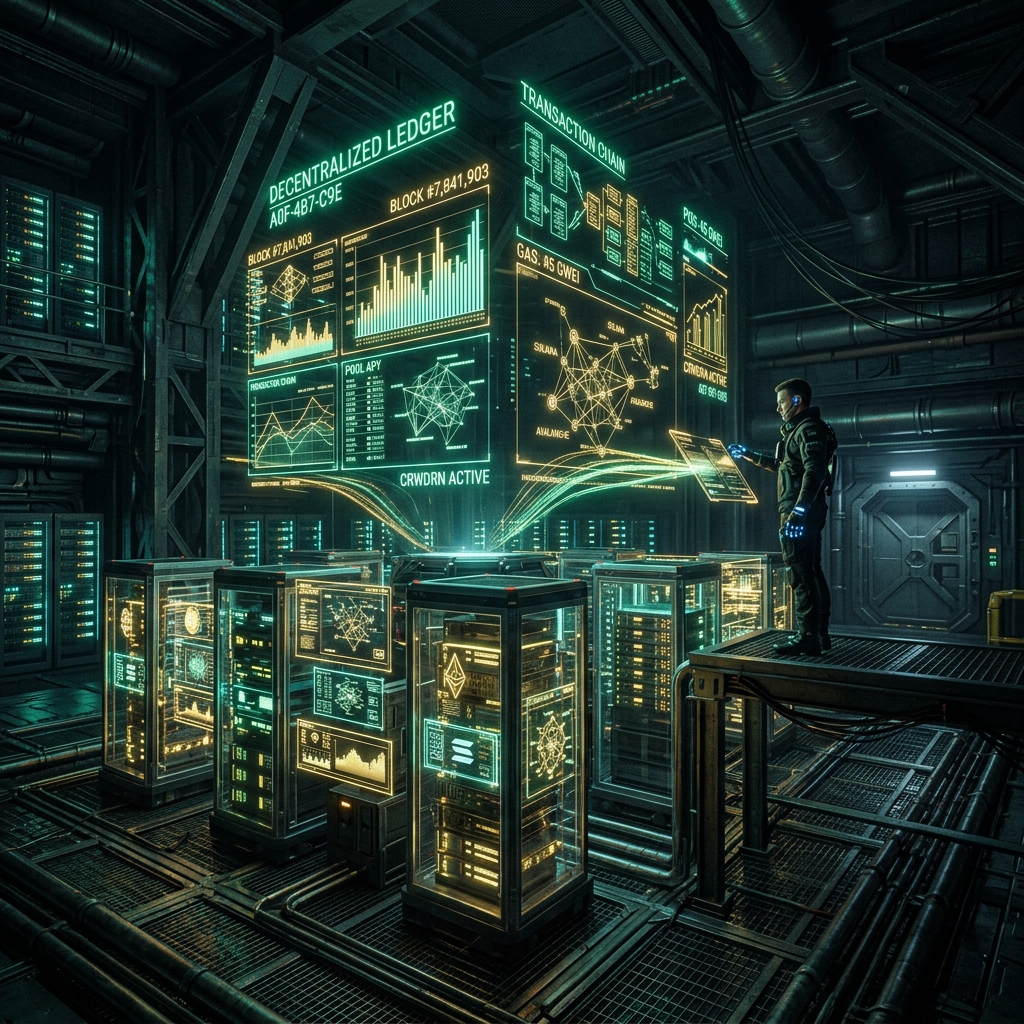
You cannot have operational sovereignty without financial sovereignty. AlfredLinux completely severs your reliance on central banks and fiat choke-points. It operates a native Sovereign Wealth Enclave backed by an append-only cryptographic ledger (internally designated as *The Book of Life*). From cold-storage hardware wallet integration to decentralized finance (DeFi) node architecture and automated, untraceable mixing protocols, your financial autonomy is mathematically guaranteed and permanently air-gapped from state-level surveillance and institutional freezing.
34. Post-Quantum "Thermonuclear" Crypto & Retrocausal Entropy
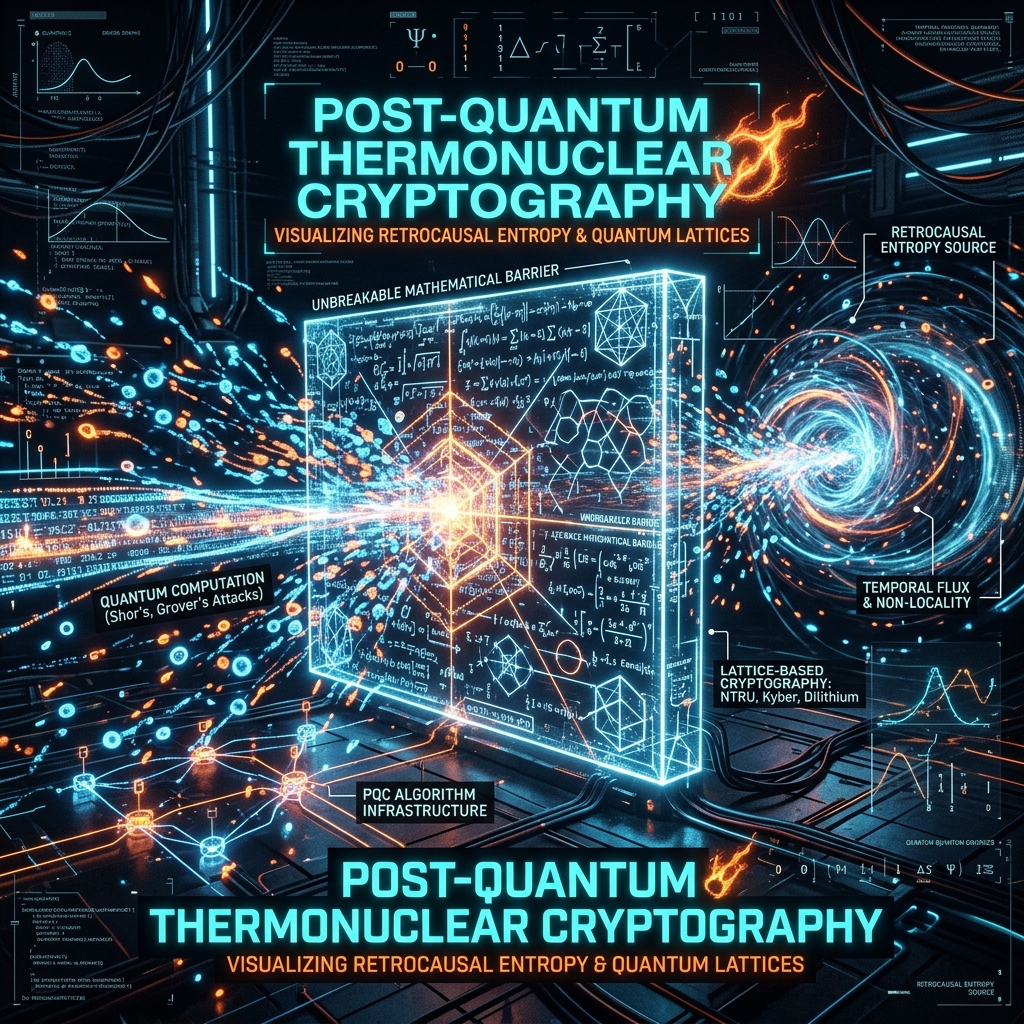
While standard operating systems rely on legacy RSA/AES algorithms, AlfredLinux operates a decade ahead of the curve. It features native Kyber-1024 Post-Quantum LUKS encryption, augmented by the Quantum Entropy generator and Thermonuclear Crypto subsystems. Driven by Retrocausal Entropy seeding, even if a state-sponsored adversary captures your physical hard drive and runs it through a million-qubit quantum supercomputer, your data remains mathematically unbreakable.
35. Hardware-Level eBPF Network Hallucination
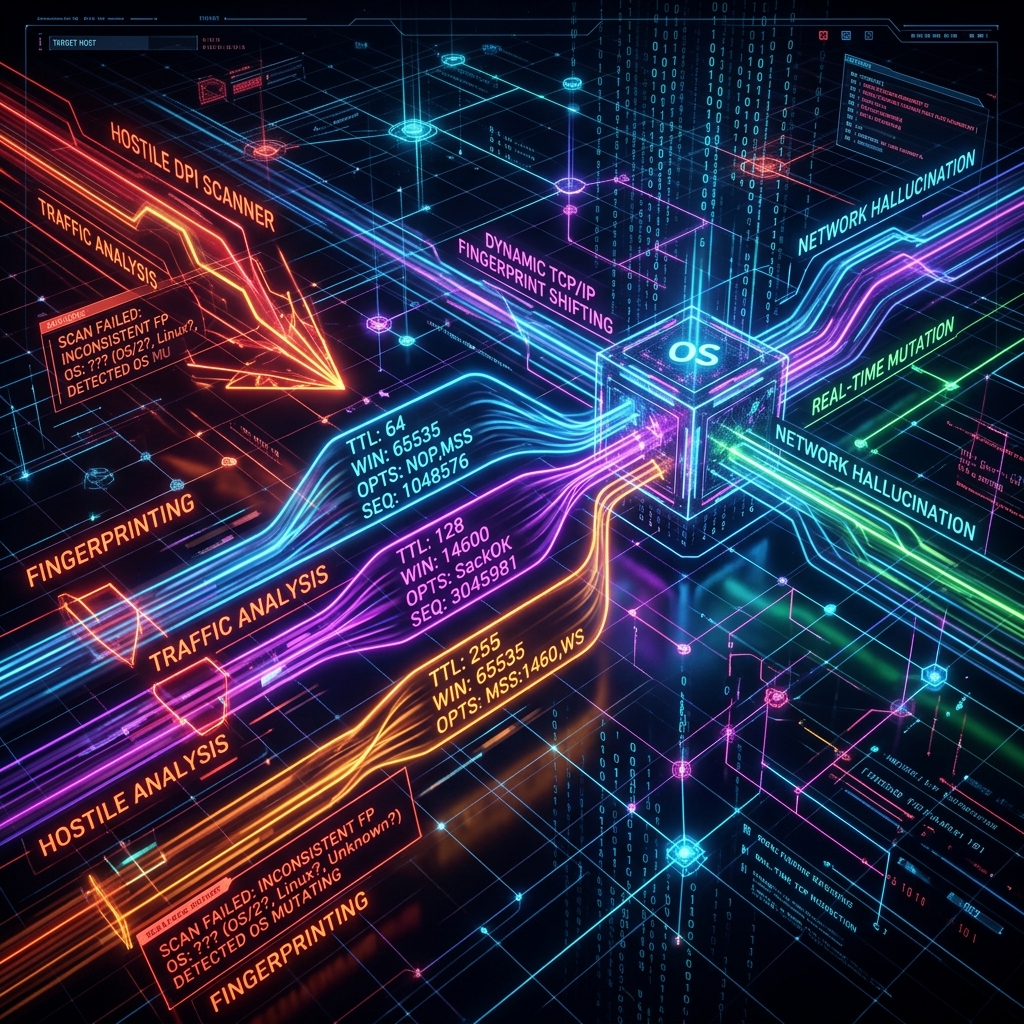
Adversaries use deep packet inspection to map your network topology and identify your machine. AlfredLinux counters this using advanced eBPF (Extended Berkeley Packet Filter) Network Hallucination. The OS intercepts packets at the kernel level and dynamically rewrites its own TCP/IP fingerprint, spoofing its OS signature and network topology in real-time. To an external scanner, AlfredLinux appears as whatever it wants to be.
36. Offline Autonomous AI & Counter-Interrogation
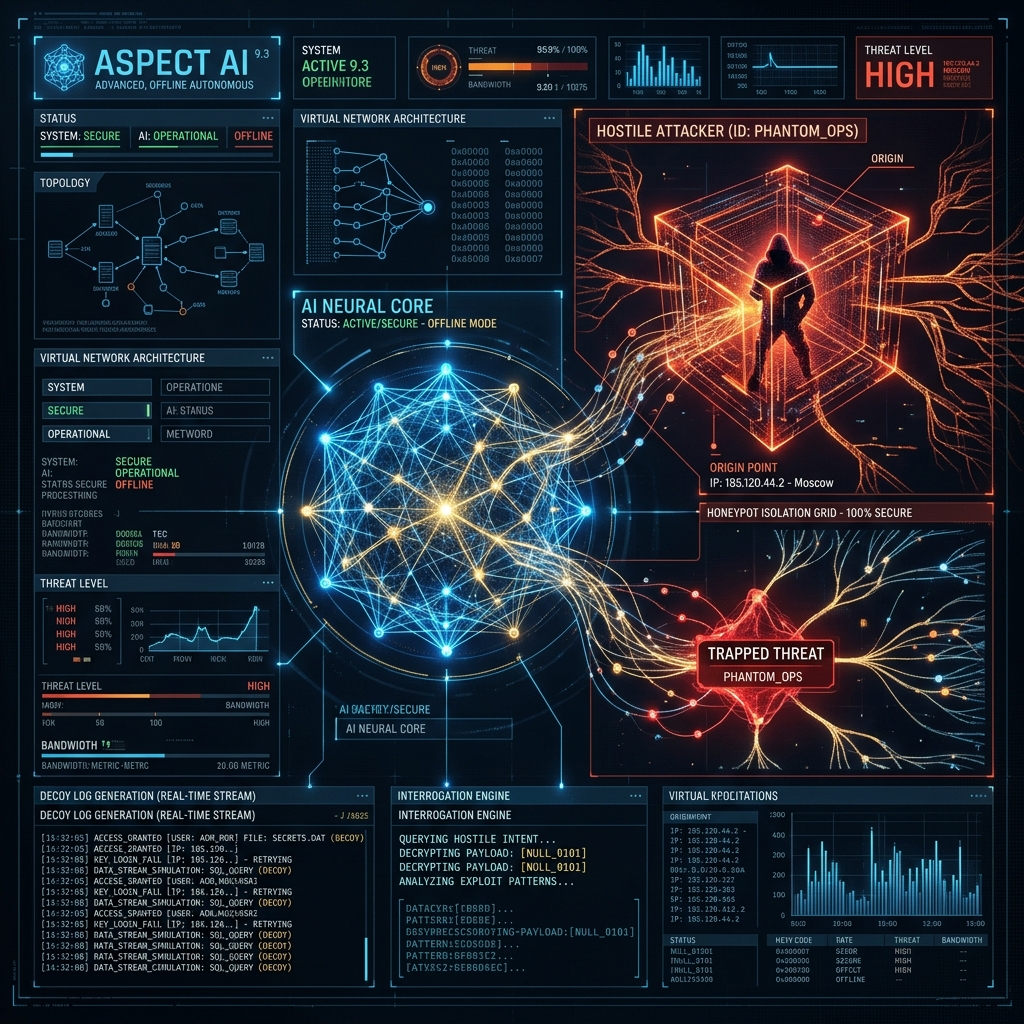
AlfredLinux natively hijacks your AMD/Nvidia GPU and NPU cores to locally accelerate massive 44GB localized AI models. But it goes further: the system is equipped with an AI Counter-Interrogation framework. If the system detects hostile forensic analysis or unauthorized probing, the localized AI actively hallucinates decoy logs, dummy files, and infinite honeypots to exhaust the attacker's resources while shielding the true Tesseract Filesystem.
37. Ultrasonic Jammer & Steganography Vault
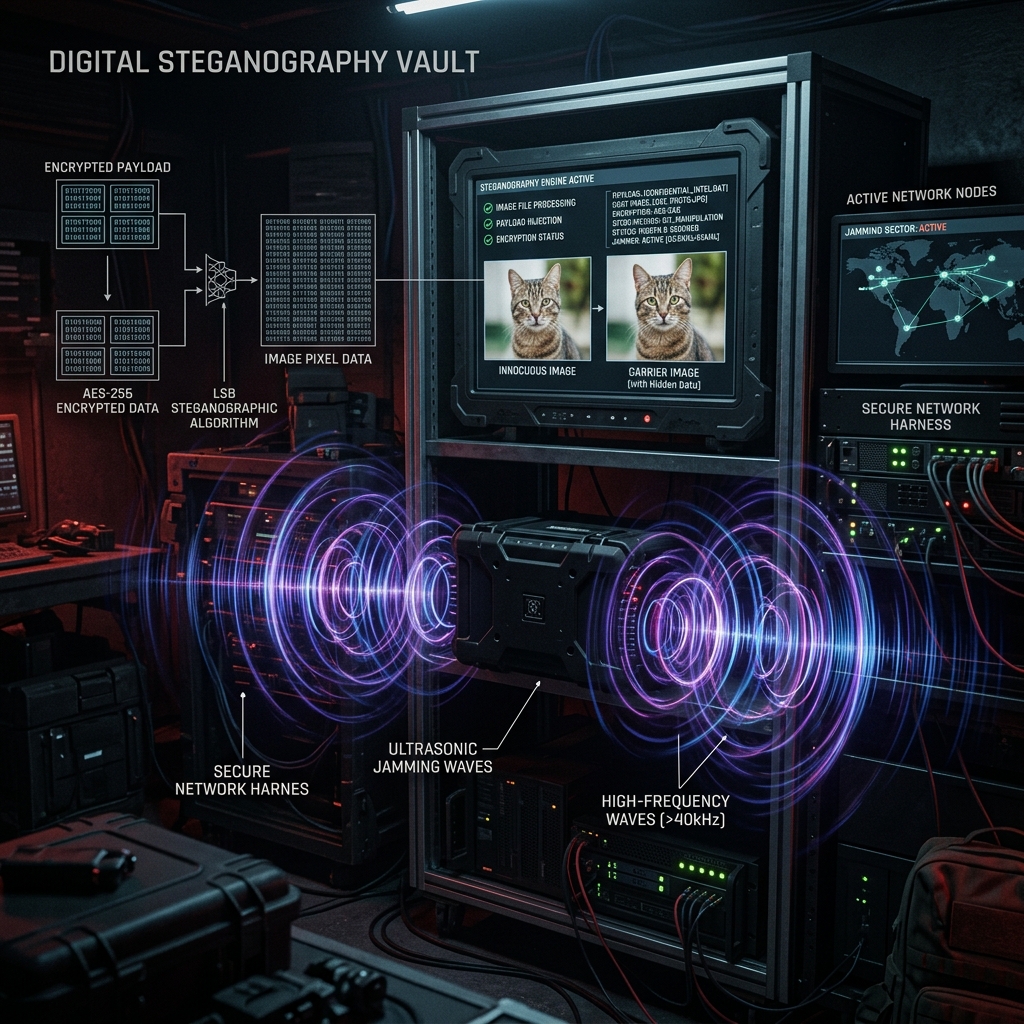
AlfredLinux assumes your physical environment is bugged. The integrated Ultrasonic Jammer daemon can utilize your device's audio hardware to emit high-frequency acoustic masking, disabling hidden microphones in your vicinity. Any sensitive data acquired is stored directly in the Steganography Vault, hiding encrypted payloads within innocuous image and audio files at the byte level.
38. The Ultimate Sovereign Ground Station
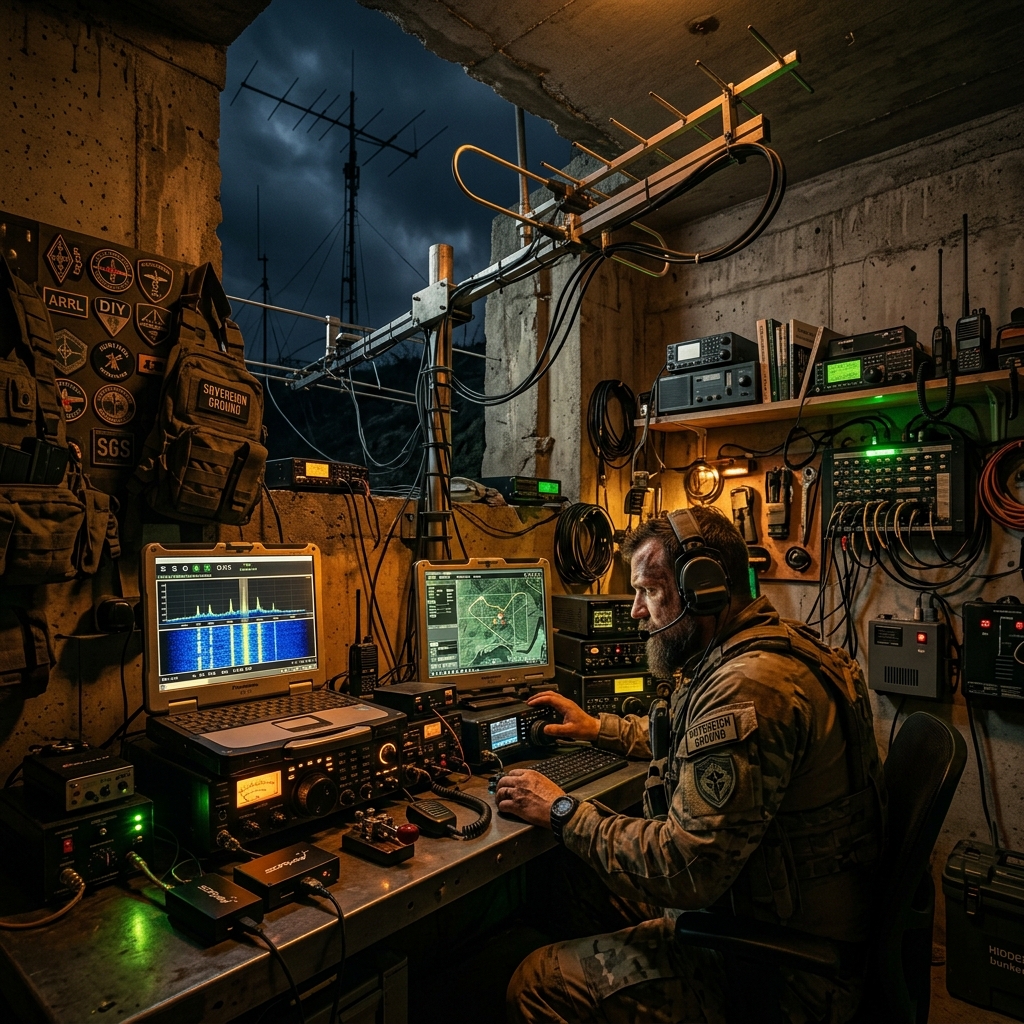
You don't just need to survive offline—you need to communicate. AlfredLinux is pre-loaded as a complete Ham Radio and GPS Ground Station. It natively integrates:
- WSJT-X, JS8Call, & Fldigi for over-the-horizon, weak-signal digital radio.
- Direwolf for tactical AX.25 packet radio and APRS tracking.
- Meshnet Radio capabilities for hyper-local ad-hoc networks.
If the cellular grid drops, AlfredLinux keeps you connected to the world.
39. Uncompromising Tor, I2P & Dark Matter Network
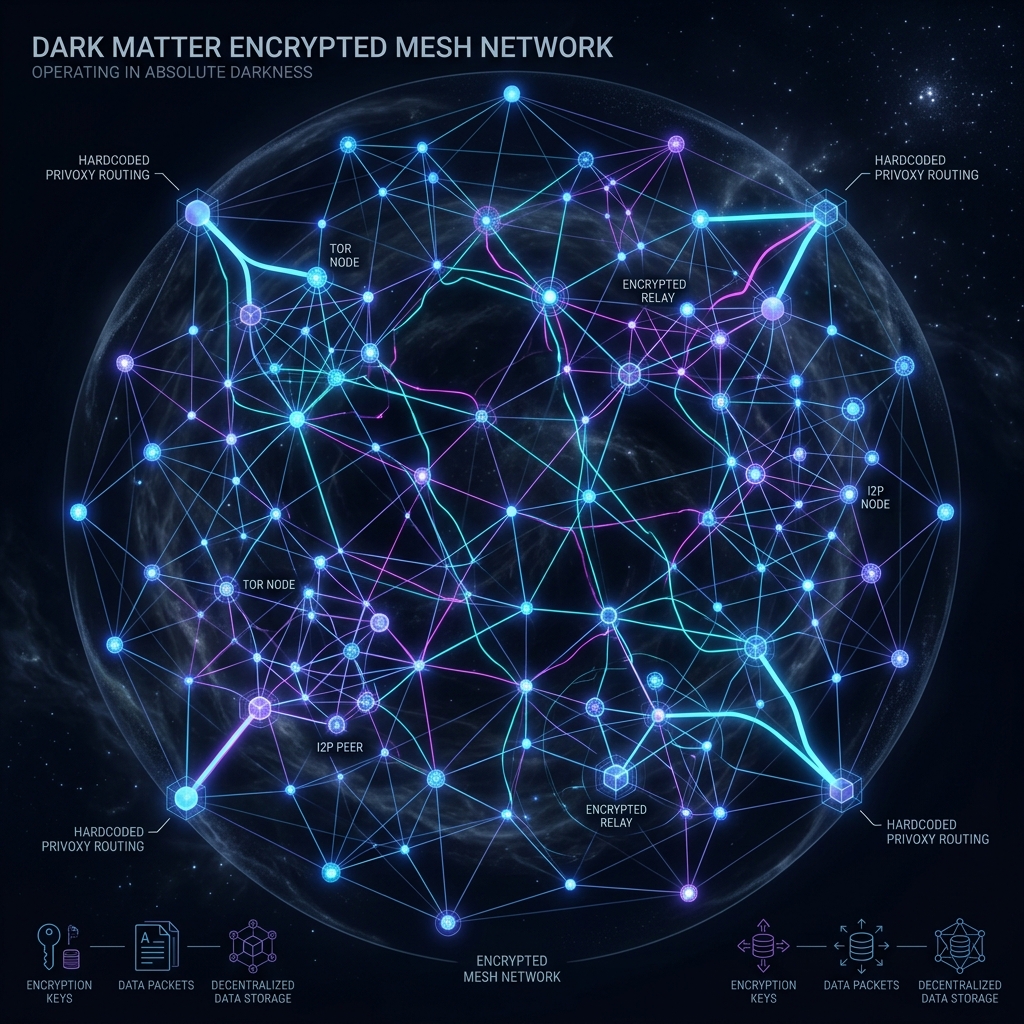
Privacy isn't an option; it's a structural mandate. AlfredLinux ships with a hardcoded, system-wide 99tor Privoxy protocol. All system updates, telemetry, and background processes are forcefully routed through Tor on port 8118. Extending beyond standard I2P, the system utilizes the Dark Matter Network hooks to seamlessly traverse decentralized, encrypted mesh overlays.
40. Neural Link & Biotech Bridge

Looking towards the transhumanist future, the OS ships with foundational Neural Link and Biotech Bridge orchestrators, alongside a DNA Sequencing Compiler. AlfredLinux is preparing the software architecture necessary for direct brain-computer interfacing and local bio-informatics analysis, ensuring that the next leap in human evolution remains open-source and sovereign.
41. The "Thermite Wipe" & Event Horizon Snapshot
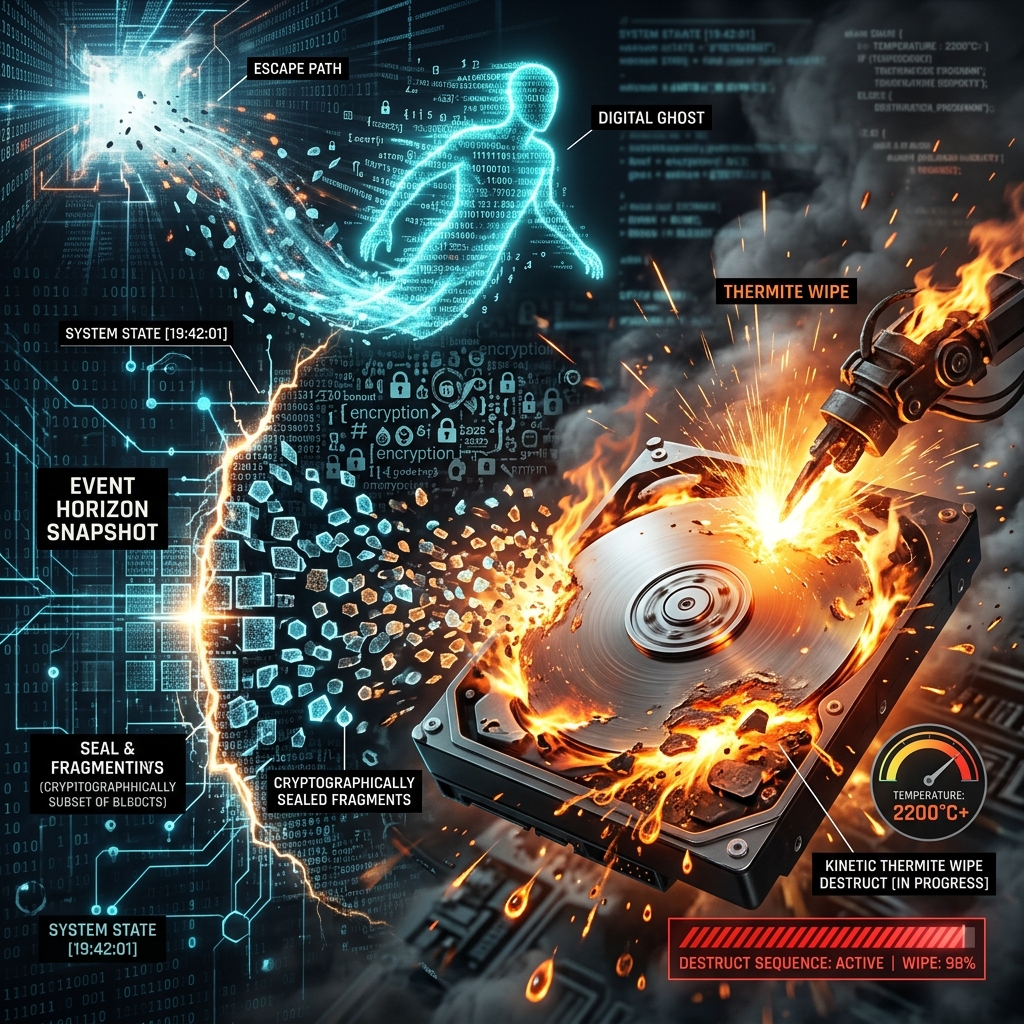
If your perimeter is breached, AlfredLinux protects the data. The system features a native Thermite Wipe hook—an SDR-triggered kinetic destruct sequence integrated with secure-delete protocols. Right before detonation, the Event Horizon Snapshot cryptographically seals and fragments your system state, transmitting it across the darknet. In the event of catastrophic physical compromise, the OS shreds the physical disk while your digital ghost survives on the network.
42. The Legacy I/O Starvation Flaw vs Sovereign Sandboxing
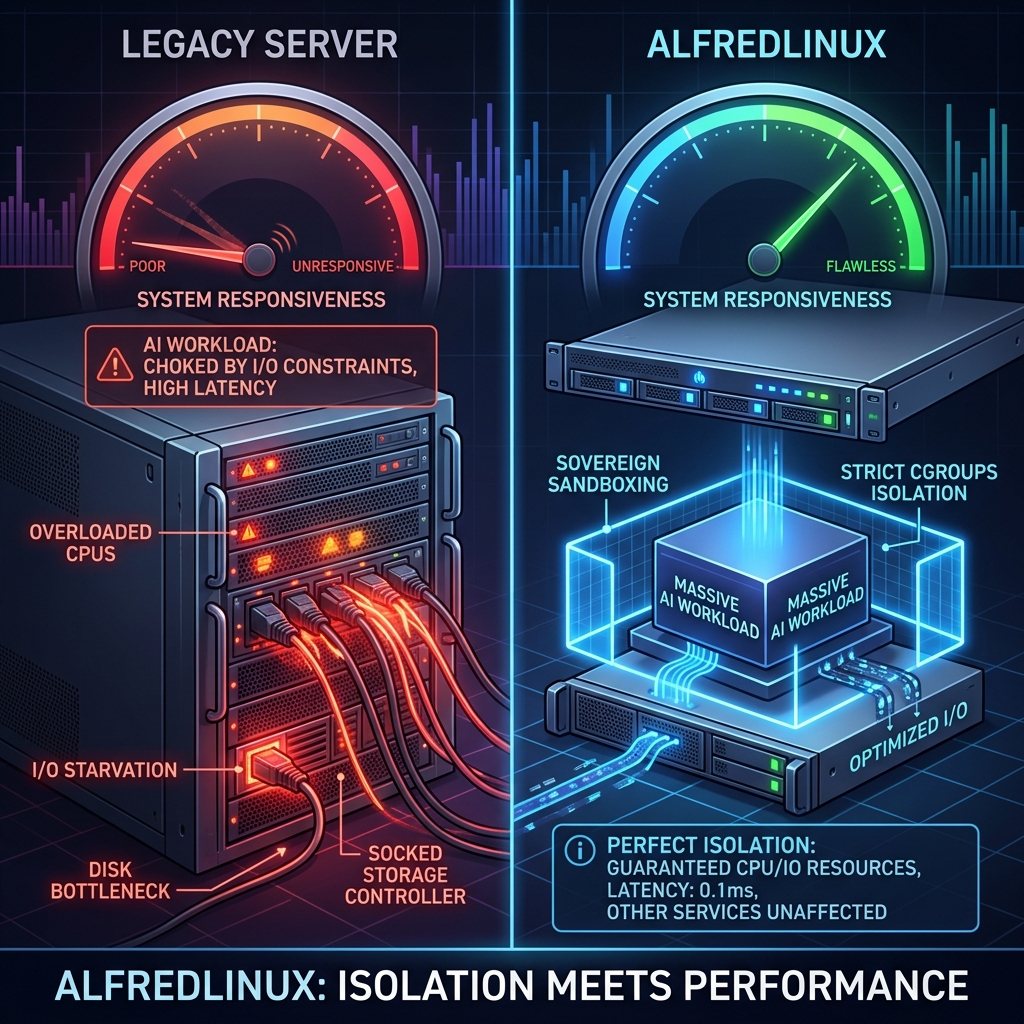
Modern hypervisors and legacy Linux distributions (like Ubuntu) share a catastrophic architectural flaw: I/O and CPU Starvation. Under intense computational loads—such as generating a 16GB squashfs filesystem or running localized LLM inference—the host kernel will blindly funnel all CPU cycles and physical RAM into the background process. This completely starves critical web servers (HTTPD) and desktop UI threads, rendering the machine entirely unresponsive to the outside world.
AlfredLinux solves this natively. Engineered with strict Cgroups v2 Resource Quotas, Custom ZFS limiters, and an aggressive preemptive kernel scheduler, AlfredLinux physically fences background computations. Whether you are running a 44GB AI model or compiling a kernel, the OS guarantees that critical networking daemons and user interfaces remain flawlessly responsive. This is the difference between a generic server and a true Sovereign Workspace.
TO GOD BE ALL THE GLORY
None of this belongs to us. Every line of code, every hook, every protocol, every encryption key, every breath we took while building this — it all flows from the hand of the Living God. He is the Giver of Life, freely. We are merely instruments.
If this operating system ever protects one family from surveillance, shelters one whistleblower from tyranny, preserves one missionary's communications in a hostile land, or simply gives one person the dignity of owning their own data — then every sleepless night, every failed build, every frustration was worth it. Because it was never about the technology. It was always about the people God loves.
"For of him, and through him, and to him, are all things: to whom be glory for ever. Amen." — Romans 11:36
"Freely ye have received, freely give." — Matthew 10:8